Essay IV — The Body Becomes a Person
Ray Bolger, Theatrical Dance, and Stylized Presence
In the previous essay, I argued that in George Balanchine dance becomes form made visible. The movements of the dancers in Agon are accountable above all to musical structure. The choreography reveals the architecture of Stravinsky’s score through bodily movement. The dance holds together because the form holds together.
But dance does not always organize itself primarily around musical architecture. Sometimes movement becomes accountable not chiefly to abstract form, but to the body itself—to the distinctive way a particular person inhabits space, distributes weight, suspends rhythm, interrupts symmetry, or moves through the world.
At this point another possibility emerges:
Dance may become the visible disclosure of persona.
Or more simply:
Movement may become so deeply identified with a particular body that the body itself becomes theatrical.
This brings us to Ray Bolger.
Balanchine once remarked that Bolger was his favorite dancer. At first this seems surprising. Bolger was not a classical ballet dancer. He was lanky, comic, eccentric, asymmetrical. He belonged less to the concert stage than to vaudeville, Hollywood musicals, and American theatrical dance.
Yet the more one watches Bolger, the less surprising Balanchine’s admiration becomes.
For Bolger possessed something exceedingly rare: every movement he made was unmistakably his own.
His body seemed governed by a private geometry. Limbs extended too far and then somehow recovered. Weight shifted at impossible moments. Movements collapsed and reassembled themselves mid-phrase. He moved not like an idealized human figure but like a body perpetually rediscovering balance in real time.
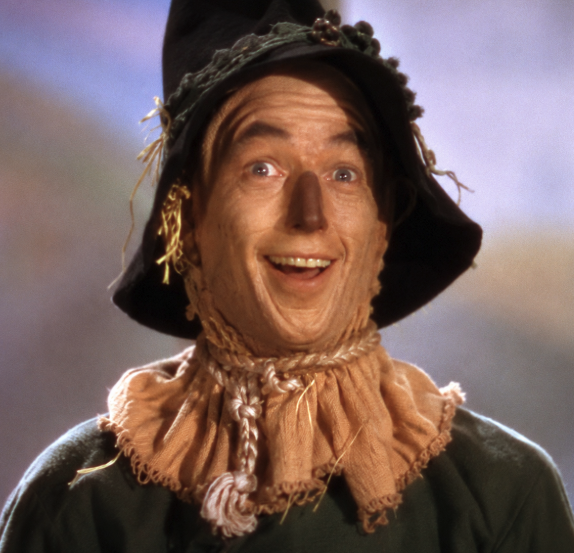
This quality reached its mythic expression in his portrayal of the Scarecrow in The Wizard of Oz (1939).
But the remarkable thing about Bolger is that he never stopped being the Scarecrow.
Or perhaps more precisely:
The Scarecrow was not merely a role Bolger played. The Scarecrow was the revelation of Bolger’s movement-essence.
Watch Bolger dance years later in The Harvey Girls (1946) and the same bodily intelligence immediately reappears. The loose elasticity. The comic instability. The delayed recoveries. The impossible extensions and sudden reorganizations of balance. The Scarecrow remains present because Bolger’s dance vocabulary had become inseparable from his bodily identity.
And then there’s Look for the Silver Lining (1949).
These Bolger dances reveal something important about the aesthetics of dance.
In some dancers, movement does not merely execute choreography.
Movement becomes character.
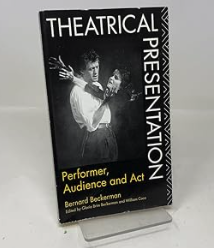
To understand what makes Bolger's dancing so distinctive, it is helpful to consider a distinction developed by Bernard Beckerman in his book Theatrical Presentation. Beckerman notes that dance originally belonged primarily to communal and social life before gradually becoming individualized theatrical performance. The distinction is more than historical. It identifies two fundamentally different ways movement can function. And Bolger appears to stand precisely at the point where one becomes the other.
In the famous dance sequence from The Harvey Girls, the surrounding dancers participate in a communal square dance. The movement is shared, social, collective. The dance belongs equally to everyone participating in it.
Then Bolger begins to move.
Suddenly the communal dance reorganizes itself around a single body.
The ordinary square-dance vocabulary becomes elongated, destabilized, stylized, theatricalized. The same basic movements remain present, but under Bolger’s influence the dance gradually shifts into something closer to tap—tap infused with his own style: more individualized, improvisatory, elastic, theatrical. Bolger transforms communal participation into performance. His performance. The crowd ceases merely to participate and instead becomes, almost despite itself, an audience.
The dance acquires a center. And that center is the individual.
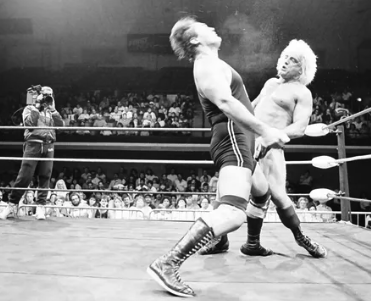
This same phenomenon appears decades later when John Travolta takes over the dance floor in Saturday Night Fever during the “You Should Be Dancing” sequence. The Bee Gees’ music is itself nearly perfect pop construction: propulsive, polished, rhythmically irresistible, sophisticated enough to sustain repeated listening while seeming utterly effortless in the moment.
Everyone else is dancing socially.
Then Tony Manero dances.
The distinction is not merely technical. It is ontological.
The room reorganizes itself around Tony Manero’s singular bodily presence.
Unlike Astaire’s elegance or Gene Kelly’s athletic exuberance, Travolta’s movement vocabulary is built around controlled cool: relaxed precision, effortless authority, rhythmic self-possession. Even the heeled boots matter, grounding the dance in swagger rather than elevation. Nothing appears strained; the complexity hides beneath composure. Travolta transforms disco from communal participation into charisma embodied in movement. The dance floor becomes theatrical space because one body suddenly acquires dramatic centrality.
What emerges in all of these cases is something deeper than choreography alone. At a certain level of theatrical achievement, movement ceases merely to execute steps or respond to music. It becomes inseparable from the person moving. Style and identity collapse into one another. The body itself acquires dramatic intelligibility.
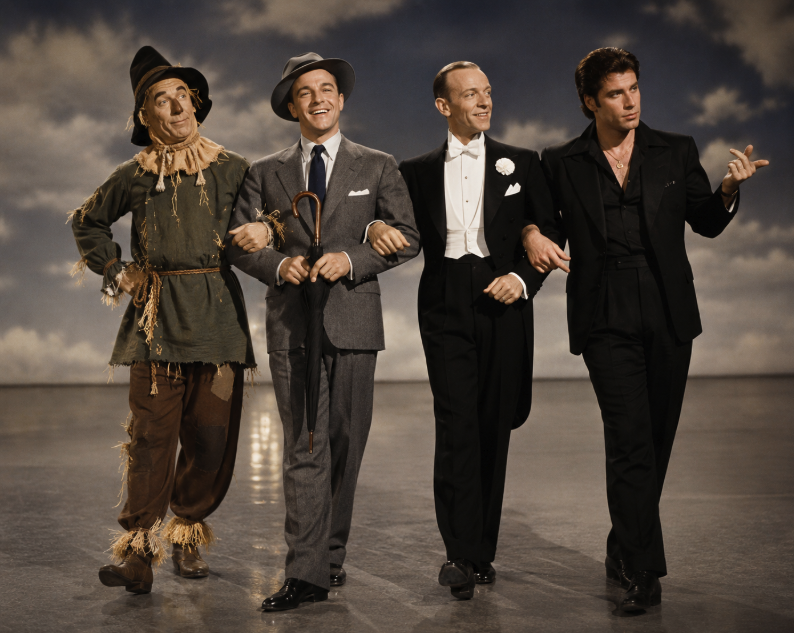
This helps explain why dancers such as Bolger, Fred Astaire, Gene Kelly, and Travolta remain so aesthetically compelling. Their movement vocabularies become inseparable from identity itself. One recognizes them instantly not because they repeat identical steps, but because every movement bears the signature of a particular embodied intelligence.
Astaire transforms movement into elegance.
Kelly transforms movement into athletic exuberance.
Travolta transforms movement into kinetic confidence and charisma.
Bolger transforms movement into elastic comic instability.
And none of them can fully stop doing it.
Even when standing still, one senses the latent vocabulary waiting beneath the body.
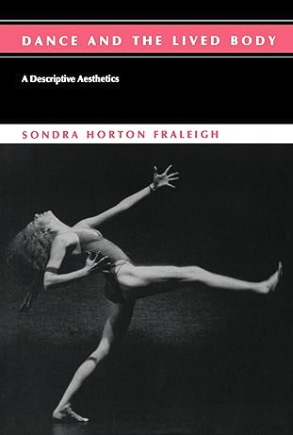
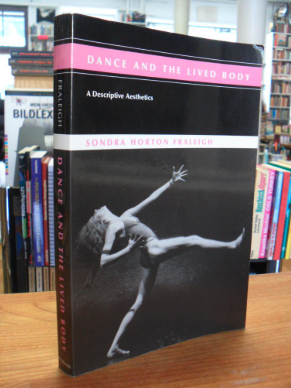
At this point, the work of Sondra Horton Fraleigh becomes especially useful. In Dance and the Lived Body, Fraleigh argues that dance cannot be understood merely as external form or visual arrangement. Dance is lived movement. The body is not simply an instrument executing choreography from the outside; it is the very site through which meaning appears.
Bolger exemplifies this beautifully.
His dancing never feels mechanically imposed upon the body. The movement appears to arise organically from the body’s own imaginative possibilities. One does not watch Bolger execute dance. One watches Bolger discover movement moment by moment through lived bodily presence.
This is perhaps why his dancing remains so joyful. The audience senses not merely technical accomplishment, but bodily delight. The movements seem perpetually on the verge of surprise, even to Bolger himself.
And yet none of this negates the importance of form. Bolger’s dancing is extraordinarily precise. Comic dance often conceals its own sophistication because it appears effortless, spontaneous, playful. But Bolger’s timing, spacing, balance, and rhythmic control are astonishingly exact. Balanchine surely recognized this immediately.
The looseness is disciplined looseness.
The instability is controlled instability.
The body appears free because the movement vocabulary has been mastered completely enough to become second nature.
What, then, does Bolger teach us about the aesthetics of dance?
He teaches us that dance may become theatrical not simply through narrative, costume, or spectacle, but because movement itself acquires identity.
A dancer becomes fully theatrical when movement becomes unmistakably his own—or, to use Sondra Fraleigh’s terminology, when the movement arises truthfully from the lived body rather than being mechanically imposed upon it.
And once this happens, the body ceases merely to perform movement.
The body becomes a person.
And Ray Bolger became, forever, the Scarecrow.