Dance Essay VIII - Order and Ecstasy
Apollonian and Dionysian Principles in Dance
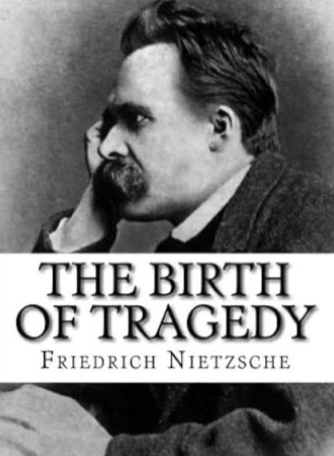
Few distinctions in aesthetics have proven as durable—or as illuminating—as Friedrich Nietzsche’s distinction between the Apollonian and the Dionysian in The Birth of Tragedy. Though Nietzsche develops this framework in order to explain the nature of Greek tragedy (and to lament its disappearance), its application extends far beyond the theater of Aeschylus and Sophocles and Euripides. It offers a way of understanding music, ritual, architecture, and perhaps most vividly of all, dance. I have even found it useful in illuminating archetypes in professional wrestling.
For Nietzsche, Apollo and Dionysus are not merely mythological figures. They name two fundamental principles of artistic existence. The Apollonian concerns form, clarity, proportion, symmetry, individuation, and disciplined structure. Apollo governs the world of lucid appearance, the realm in which boundaries remain intact and beauty emerges through order. The Dionysian, by contrast, concerns ecstasy, passion, intoxication, rhythm, dissolution, and communal force. Under Dionysus, boundaries begin to break down. The self becomes porous. One feels absorbed into larger energies—music, ritual, crowd, violence, eros, or grief.
The genius of Greek tragedy, Nietzsche argues, lies not in choosing one principle over the other, but in bringing them into productive tension. Great art does not arise from pure order or pure chaos, but from their encounter. The Apollonian gives shape to what would otherwise overwhelm; the Dionysian gives life to what would otherwise calcify. Together they create the highest forms of artistic experience.
Of course, Nietzsche’s schema has not gone unchallenged. Some later thinkers have argued that the Apollonian/Dionysian distinction is simply too binary, too neat a framework for the messy multiplicity of artistic experience. Others, especially Marxist and critical theorists, have argued that Nietzsche’s categories are too aesthetic and insufficiently attentive to structures of power, ideology, and economics. One cannot fully understand mass spectacle, they would argue, without also asking who produces it, who controls it, and to what ends. Still others—particularly classicists—have challenged Nietzsche’s historical account itself, arguing that his understanding of Greek tragedy tells us at least as much about Nietzsche as it does about ancient Greece.
These critiques are important and should not be dismissed. Yet Nietzsche’s framework has endured because of its extraordinary explanatory power. Whatever its limitations as universal theory or historical scholarship, the distinction remains phenomenologically illuminating. We do in fact recognize recurring tensions between order and ecstasy, structure and dissolution, individuality and collective force. Nietzsche’s categories endure not because they explain everything, but because they help us see something real.
In dance this tension can be clearly observed. Dance is always negotiating the relation between body and form, impulse and discipline, individuality and collective embodiment. Some dances seem almost purely Apollonian. Others pulse with Dionysian force. The greatest often reveal more complicated and unstable combinations. To see this clearly, it is useful to turn to four radically different examples: the Radio City Rockettes, the Dallas Cowboys Cheerleaders performing “Thunderstruck,” the “Dance of the Knights” from Sergei Prokofiev’s Romeo and Juliet, and the “Sacrificial Dance” from Igor Stravinsky’s The Rite of Spring, especially in the reconstructed choreography of Vaslav Nijinsky.
At first glance these examples appear to have little in common. One belongs to Broadway precision dance, one to American sports spectacle, one to Russian ballet, and one to avant-garde modernism. Yet all four can be understood as distinct answers to the same aesthetic question: how can disciplined human movement embody forces larger than the individual?
The Rockettes: Apollonian Form Perfected
The Rockettes represent perhaps the clearest example of Apollonian dance in modern popular culture. Their achievement lies not simply in the famous kick line, but in the astonishing totality of their precision. What distinguishes a great Rockettes performance is not merely synchronization in major movements, but synchronization in everything: transitions, pauses, head turns, shifts of weight, and tiny intervals of timing that spectators barely consciously register. The result is uncanny. Individual dancers seem to disappear into the larger pattern, subordinated to a higher visual order. The ensemble becomes architecture in motion.
This is the essence of the Apollonian. The pleasure here is not frenzy or emotional abandon, but the beauty of form itself. Watching the Rockettes, one experiences exhilaration through joyful order. Their lines approach abstraction, as though geometry had somehow become alive. The bodies do not express disorder, ecstasy, or passion so much as they reveal the aesthetic power of coherence itself. Here, Apollonian form is perfected.
Yet this should not be mistaken for coldness or mere intellectual exercise. The Rockettes are not performing geometry for geometry’s sake. In the Christmas Spectacular, for example, the choreography is populated with toy soldiers, reindeer, Santas, and the visual language of childhood wonder. The effect is charming, festive, and delightful—hardly austere. But that only deepens the point. Apollonian order need not feel sterile. It can also produce joy, warmth, wonder, and delight. Even whimsy, when perfectly ordered, becomes strangely transcendent.
Thunderstruck: Dionysian Energy Disciplined
The Dallas Cowboys Cheerleaders performing “Thunderstruck” occupy a very different space. At first glance, the routine seems to belong almost entirely to the Dionysian. The music itself—AC/DC’s iconic 1990 anthem—is loud, electric, aggressive, and relentlessly rhythmic. It is one of the great stadium songs, designed to stir bodies into motion and crowds into excitement. The environment in which the cheerleaders perform amplifies this further: football culture, public spectacle, mass crowds, and the kinetic energy of American sports ritual.
There is also an important historical lineage here. The modern cheerleading spectacle did not emerge in isolation. Behind it stand military drill, parade choreography, and especially the American marching band halftime tradition. Long before elite NFL cheer choreography reached its current sophistication, halftime performance had already become a ritualized fusion of athletic precision, music, mass coordination, and visual spectacle. The Dallas Cowboys Cheerleaders inherit this tradition, but transform it into something more overtly theatrical, sensual, and rhythmically explosive.
The iconic Cowboys Cheerleaders uniform matters here as well. Remarkably unchanged over decades, the blue-and-white stars, white boots, and fitted vest have themselves become ritualized symbols, instantly recognizable and culturally charged. The continuity of the costume contributes to the continuity of the performance tradition itself. This is not incidental. It is part of the choreography’s meaning.
Yet, though steeped in tradition, what the performance projects is vitality, sensuality, charisma, and collective excitement. It feels exuberant, indeed spontaneous. Yet repeated viewings reveal something astonishing: everything is controlled. Not only the obvious formations, turns, and kicks, but even the seemingly incidental details—hair flips, head turns, pauses, and transitions—are synchronized with remarkable precision.
This is especially striking in the hair flips. In ordinary life (or in film, advertising or music videos), hair movement signifies spontaneity, freedom, and unstructured energy—if not a touch of chaos. But here even the hair flips are disciplined into form. What appears spontaneous is in fact choreographed. This small detail reveals the entire structure of the routine.
The pom-poms deepen this further. Historically, pom-poms functioned as visual amplifiers, accessories meant to increase visibility and accentuate gesture. But in elite cheer choreography they have become something far more integral. They are no longer mere props. They have become extensions of the dancers’ bodies themselves, sharpening lines, punctuating rhythms, and creating visual accents that are inseparable from the choreography. Without them, the visual architecture of the dance would collapse. What appears ornamental is in fact choreographed.
Thus “Thunderstruck” presents a fascinating paradox. It appears wild, energetic, and Dionysian, but its energy is possible only because of immense Apollonian discipline beneath it. This is not chaos. It is ecstasy carefully shaped into theatrical form.
Dance of the Knights: Apollonian Order Under Dionysian Pressure
“Dance of the Knights,” from Prokofiev’s Romeo and Juliet, offers a different configuration altogether. Here the dominant impression is monumental order. The music is massive, almost architectural in its force, with pounding rhythms and ominous brass that seem to announce the arrival of historical weight itself. The choreography often emphasizes processions, hierarchies, and ceremonial movement. Bodies move as though they are embodiments of social structure.
Yet the world of Romeo and Juliet is a world of buried violence. Beneath the aristocratic formalities lie hatred, erotic passion, vengeance, and the inevitability of tragedy. This tension gives the dance its peculiar power. The order on display is real, but so too is the catastrophe pressing against it.
There is something distinctly Russian in this aesthetic tension. One thinks of Dostoevsky, where social order, religious form, and moral structure coexist uneasily with immense, volcanic subterranean pressures—violence, irrationality, obsession, and spiritual catastrophe. We recall the life of Fyodor Karamazov, and indeed the entire Karamazov family. Prokofiev captures something similar here. The grandeur of civilization remains visible, but one senses deep instability underneath.
Unlike the Rockettes, where order itself is the goal, the end, the telos, here order is under pressure. The structure is magnificent but unstable. One feels the violence already present beneath the ceremony, as though the music itself were warning that the social order cannot hold. This is not yet Dionysian eruption. It is Apollonian order shadowed by Dionysian threat. The dance feels like Mount St. Helens before eruption—massive, majestic, apparently stable, and yet already containing catastrophe.
The Dionysian force does not fully emerge in “Dance of the Knights” itself. There it remains latent, sensed as pressure, foreboding, and threat. It erupts later—most clearly in the Street Fight sequences, especially the confrontations involving Mercutio and Tybalt. Here the buried violence becomes kinetic. Ceremony gives way to rage, hierarchy gives way to (choreographed) chaos, and the ordered social world begins to fracture under the force of passion and vengeance. What was only implied in “Dance of the Knights” becomes explicit. The volcano erupts.
Sacrificial Dance: Dionysian Chaos Through Apollonian Discipline
The most extreme example is the “Sacrificial Dance” from The Rite of Spring. When Stravinsky’s ballet premiered in Paris in 1913, it provoked one of the most famous scandals in performance history. The music itself sounded violent, primal, and destabilizing. Nijinsky’s choreography intensified the shock by rejecting nearly every classical ideal of grace, elevation, and beauty.
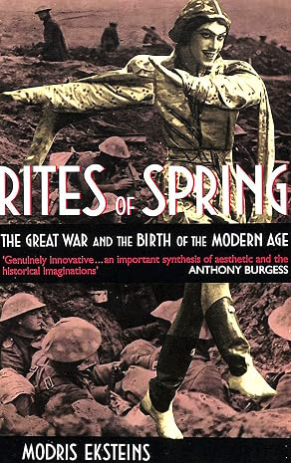
In the reconstructed Nijinsky choreography, one sees bodies that are grounded, heavy, angular, and often awkward. The movement feels archaic, almost pre-civilizational. There is little of the ethereal elegance associated with ballet. Instead there is stomping, ritual, exhaustion, and communal force.
In the story of the ballet, the “Sacrificial Dance” centers on the Chosen One, selected by the group to dance herself to death as an offering. Here the individual body becomes the site of communal necessity. What the audience experiences is terror, frenzy, inevitability, and collapse. It feels chaotic.
But this is the crucial point: it is not actually chaotic. The sensation of chaos is itself produced through astonishing formal discipline—exact rhythms, precise spatial relationships, and severe choreographic control. This may be the purest realization of Nietzsche’s insight. The dance creates the appearance of primal disorder through rigorous artistic structure.
Here, the Dionysian reaches its highest intensity, but only through Apollonian means. The individual dissolves into ritual, and ritual dissolves into sacrifice. This is chaos transfigured by form.
Four Relationships Between Order and Ecstasy
Taken together, these four examples reveal something important. The Apollonian and the Dionysian are not merely opposite ends of a spectrum. They are principles capable of entering into multiple relationships.
The Rockettes embody Apollonian form perfected. “Thunderstruck” embodies Dionysian energy disciplined. “Dance of the Knights” embodies Apollonian order under Dionysian pressure. The “Sacrificial Dance” embodies Dionysian chaos achieved through Apollonian discipline.
What emerges from this comparison is a larger truth about dance itself. Dance is not merely movement. It is one of the deepest human practices through which bodies negotiate the tension between order and ecstasy, discipline and abandon, individuality and collective force. Whether in ritual, ballet, Broadway, stadium spectacle, or even professional wrestling, human beings gather again and again to witness bodies moving together in time because in such movement something profound becomes visible.
We see order become alive. We see energy become form. We see discipline create ecstasy.
And in these moments, Nietzsche’s ancient gods are still dancing.